

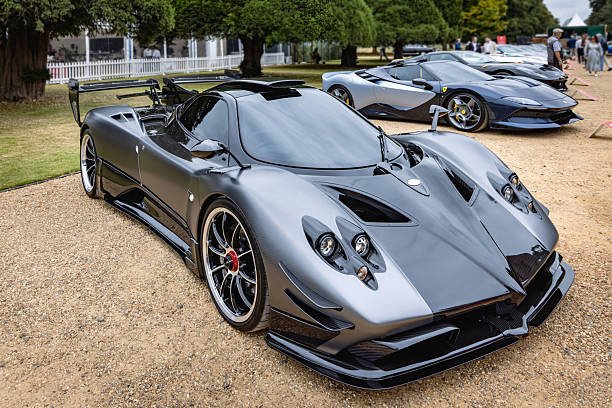
The world of high-performance automobiles is full of extraordinary machines, but only a few can capture the imagination of supercar enthusiasts quite like a Pagani. Known for combining advanced engineering with breathtaking design, the Italian manufacturer has built a reputation for creating vehicles that are as much works of art as they are performance machines. Now, attention is turning toward the Pagani Huayra R Evo reportedly spotted at a racetrack in Mexico for the first time, a development that could make this exclusive track-focused hypercar even more interesting to automotive fans.
The Huayra R Evo represents an extreme approach to performance, featuring a naturally aspirated V12 engine, sophisticated aerodynamics, lightweight construction, and a design inspired by motorsport history. Unlike conventional luxury supercars designed for public roads, this machine was developed specifically for the racetrack, where performance takes priority over everyday comfort.
Although the reported Mexican sighting has generated interest, an official confirmation of the specific location and occasion has not been established here. Nevertheless, the Huayra R Evo itself deserves a closer look, particularly for enthusiasts interested in its engineering, racing-inspired styling, and potential appearance at exclusive automotive events.
What Makes the Pagani Huayra R Evo So Special?
The Pagani Huayra R Evo is an evolution of the Huayra R, a track-only hypercar introduced by Pagani in 2021. The newer Evo version takes the original concept further by improving aerodynamic performance, refining the suspension, and introducing a more dramatic open-top design.
Pagani officially presented the Huayra R Evo Roadster in February 2024. The project reflects the company’s ambition to deliver a more immersive driving experience while retaining the craftsmanship and engineering that define its vehicles.
One of the most distinctive characteristics of the car is its long-tail-inspired bodywork, often associated with the Italian term codalunga. Its extended proportions, sculpted surfaces, and carefully developed aerodynamic components give it a purposeful appearance that immediately separates it from conventional road-going hypercars.
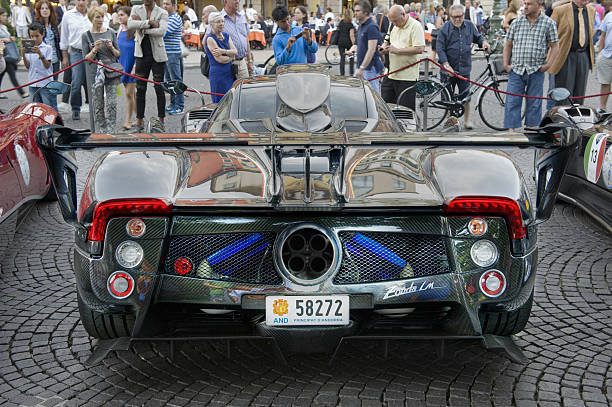
The design draws inspiration from historic endurance-racing machines and modern open-wheel racing cars. Rather than simply making the vehicle look aggressive, Pagani developed its exterior around the demands of high-speed circuit driving.
For automotive enthusiasts, this combination of visual drama and functional engineering is a major part of the Huayra R Evo’s appeal.
A Naturally Aspirated V12 Engine That Delivers 900 Horsepower
The engine is arguably the most exciting part of the Pagani Huayra R Evo.
Power comes from a specially developed 6.0-liter, naturally aspirated V12 engine known as the Pagani V12-R Evo. According to Pagani’s official technical specifications, the engine produces approximately 900 horsepower at 8,750 rpm and delivers 770 Nm of torque between 5,800 and 8,200 rpm.
These figures place the Huayra R Evo firmly among the most extreme track-focused hypercars.
Unlike turbocharged engines that rely on forced induction to increase power, a naturally aspirated engine draws air into its cylinders without a turbocharger or supercharger. This configuration can deliver a distinctive throttle response and an intense engine soundtrack, particularly at high engine speeds.
For drivers who appreciate traditional motorsport engineering, the experience of a high-revving V12 remains difficult to replace.
The engine was developed with a focus on delivering strong performance throughout the rev range while maintaining the character and sound that make a naturally aspirated racing engine so appealing.
The result is a powertrain designed not merely to produce impressive numbers but also to create an emotional connection between the driver and the machine.
At a racetrack, where the engine can operate closer to its intended performance limits, these characteristics become especially important.
Performance Specifications at a Glance
The Huayra R Evo combines substantial power with a carefully engineered chassis and dedicated racing equipment.
Here are some of its key specifications published by Pagani:
- Engine: 6.0-liter naturally aspirated V12
- Maximum power: 900 horsepower at 8,750 rpm
- Maximum torque: 770 Nm
- Transmission: Six-speed sequential racing gearbox
- Drivetrain: Rear-wheel drive
- Dry weight: Approximately 1,060 kg
- Maximum speed: Approximately 350 km/h, according to Pagani’s technical specifications
- Braking system: Brembo carbon-ceramic racing brakes
- Tyres: Pirelli P Zero slick tyres, with dry- and wet-weather specifications
The combination of a lightweight structure and a powerful engine gives the car an impressive power-to-weight ratio.
Its low mass also benefits braking, cornering, and acceleration, although real-world performance depends on track conditions, tyre temperatures, setup, and driver skill.
It is important to distinguish the published specifications of the Huayra R Evo from independently measured performance figures. Actual lap times and top speeds can vary depending on the circuit and testing conditions.
Why a Mexican Racetrack Sighting Would Attract Attention
Mexico has an enthusiastic automotive community, with motorsport events, specialist car gatherings, and circuits that attract both local and international attention.
A hypercar as exclusive as the Pagani Huayra R Evo would naturally stand out in such an environment. Its appearance would offer fans an opportunity to see a machine that is rarely encountered outside specialist events and private track sessions.
Unlike mass-produced performance cars, Pagani hypercars are built in limited numbers and are associated with highly exclusive ownership experiences. The Huayra R Evo also belongs to the brand’s dedicated track-car family, making its appearances particularly interesting to enthusiasts.
If the reported sighting is confirmed, several possibilities could explain the car’s presence. It might have attended a private track event, participated in a specialist automotive gathering, or been driven during a customer experience organized around circuit performance.
However, without verified information about the event, the circuit, or the vehicle’s owner, it would be premature to identify a specific explanation.
The distinction matters because a car appearing at a racetrack does not necessarily mean it participated in an official race or completed a public demonstration.
Even so, the possibility of seeing the Huayra R Evo in Mexico highlights the international reach of the exclusive hypercar community.
Aerodynamics Designed for Serious Track Performance
The Huayra R Evo’s exterior is not simply an exercise in extravagant styling. Its bodywork plays an important role in generating aerodynamic downforce and maintaining stability at high speeds.
Pagani reports that the Evo’s aerodynamic development increased downforce by 45 percent compared with the original Huayra R, while retaining an emphasis on predictable handling.
Downforce pushes the vehicle toward the track surface, helping the tyres maintain grip through fast corners. When balanced correctly, it can allow a car to negotiate corners at speeds that would be difficult to achieve with a less aerodynamically efficient design.
Several elements contribute to the Huayra R Evo’s aerodynamic character.
The extended bodywork helps manage airflow around the vehicle, while the prominent rear wing and rear diffuser contribute to aerodynamic stability. The front aerodynamic components help balance the forces acting on the front and rear axles.
The car’s roofless configuration also adds to its visual drama. It allows occupants to experience the engine’s sound and the surrounding atmosphere more directly, creating a different connection with the driving environment.
However, removing the conventional roof does not automatically improve aerodynamic efficiency. Pagani’s engineers had to consider airflow, structural rigidity, and occupant protection while developing the open-top design.
The result is a car in which the exterior shape serves a specific performance purpose.
Lightweight Construction and Advanced Engineering
Building a 900-horsepower hypercar requires more than installing a powerful engine. The chassis must handle substantial forces while providing the rigidity and protection required for demanding track use.
Pagani addresses this challenge with advanced composite materials, including its Carbo-Titanium HP62 G2 and Carbo-Triax HP62 construction.
These materials form part of the vehicle’s central monocoque, a structural arrangement that combines strength and stiffness with careful weight management.
Reducing weight is particularly valuable in a track car because the benefits extend across several areas of performance. A lighter vehicle generally requires less energy to accelerate, places fewer demands on the brakes, and can respond more effectively to changes in direction.
The Huayra R Evo also uses a sophisticated suspension system with forged aluminum components and electronically controlled shock absorbers. Additional heave dampers help manage vertical body movement, supporting stability during braking, acceleration, and cornering.
The braking hardware is equally serious. Pagani specifies ventilated Brembo CCM-R carbon-ceramic discs with six-piston calipers at both the front and rear.
These components are engineered to withstand the repeated heat and mechanical demands associated with high-performance circuit driving.
Together, the chassis, suspension, brakes, and aerodynamic package demonstrate why the Huayra R Evo should be viewed as a purpose-built track machine rather than simply an exotic road car.
What Makes the Huayra R Evo Different From the Original Huayra R?
Although the two vehicles share a common foundation, the Evo represents a substantial development of the original concept.
The Huayra R established Pagani’s modern track-focused direction with an 850-horsepower naturally aspirated V12, advanced composite construction, and aerodynamics developed for circuit use.
The Huayra R Evo raises the engine output to 900 horsepower and introduces further aerodynamic refinements. Its open-top design also changes the character of the driving experience.
Another important distinction is the Evo’s focus on improving stability and precision. The suspension refinements and increased aerodynamic performance are intended to help drivers make better use of the available grip.
The differences illustrate how a manufacturer can develop an existing platform by refining individual systems instead of relying on additional horsepower alone.
In motorsport, improvements in airflow, suspension control, braking performance, and driver confidence can be just as important as an increase in engine output.
For collectors and enthusiasts, the Evo also represents a distinctive chapter in Pagani’s continuing exploration of track-only hypercars.
The Exclusive Arte in Pista Experience
The Huayra R Evo is associated with Pagani’s Arte in Pista program, an exclusive experience created for owners of the company’s track-focused hypercars.
Rather than treating the vehicles as static collector items, the program gives owners opportunities to experience their cars on prestigious circuits with support from Pagani personnel.
According to the manufacturer, these activities can include track sessions, technical assistance, data analysis, and professional guidance intended to help drivers improve their skills.
This approach reflects a different philosophy from simply purchasing a supercar and keeping it in a private collection.
Track-focused hypercars are developed to be driven in controlled environments, where their engineering can be experienced more fully than it can on ordinary public roads.
A potential appearance at a Mexican circuit would fit naturally within the broader international interest in exclusive automotive experiences. Nevertheless, there is no verified information here connecting the reported sighting to a specific Arte in Pista event.
That uncertainty should not overshadow the significance of the program itself. It demonstrates how Pagani combines vehicle ownership with engineering support and carefully organized driving experiences.
Could the Mexican Appearance Signal More Hypercar Events?
If the reported sighting is confirmed, it could generate additional interest in high-end automotive gatherings in Mexico.
The country’s car culture encompasses everything from classic automobiles and modified performance vehicles to modern supercars and international motorsport.
An appearance by a machine as distinctive as the Huayra R Evo could attract attention from enthusiasts, photographers, collectors, and specialist automotive publications.
It could also encourage renewed interest in other Pagani models, including the original Huayra R, the Zonda R, and the company’s newer road-going hypercars.
However, one reported appearance would not, by itself, establish a wider trend or indicate that Pagani is planning a dedicated Mexican program.
For now, the most useful approach is to watch for reliable photographs, information from the circuit, statements from the manufacturer, or coverage from established automotive publications.
Such evidence would help establish when and where the car appeared and whether it participated in a formal event.
Until those details are available, the Mexican sighting remains an interesting reported development rather than a fully documented automotive event.
Final Thoughts: A Track Hypercar That Commands Attention
The Pagani Huayra R Evo demonstrates what happens when a manufacturer focuses on performance without abandoning its commitment to design and craftsmanship.
Its 900-horsepower naturally aspirated V12, lightweight composite chassis, advanced suspension, and carefully developed aerodynamics make it a remarkable example of modern track-focused engineering.
The open-top configuration adds another layer to the experience, allowing the driver to hear the engine more directly and feel closer to the surrounding environment.
That combination helps explain why any reported appearance of the Huayra R Evo at a racetrack attracts attention from automotive enthusiasts.
If the vehicle has indeed been spotted at a Mexican circuit for the first time, confirmation of the location and event would make the story even more compelling. Until then, the car’s published specifications and distinctive engineering provide plenty of reasons to follow its appearances around the world.
For fans of exotic hypercars, the Huayra R Evo is a reminder that extraordinary performance is not measured by horsepower alone. Lightweight construction, aerodynamic balance, precise suspension engineering, and an unforgettable engine character all contribute to the experience.
Whether seen at an exclusive track gathering or experienced through official Pagani demonstrations, this Italian hypercar remains a fascinating example of how motorsport technology and artistic design can come together in one extraordinary machine.
Editorial note: The reported first-time Mexican sighting has not been independently verified in the sources consulted. The vehicle specifications and technical background in this article are based on Pagani’s published information.
SEO Details
SEO title: Pagani Huayra R Evo Spotted at a Racetrack in Mexico for the First Time
Meta description: The Pagani Huayra R Evo reportedly spotted at a Mexican racetrack has sparked interest. Explore its 900-hp V12, aerodynamic design, and track performance.
Focus keyword: Pagani Huayra R Evo spotted at a racetrack in Mexico for the first time
Suggested URL slug: pagani-huayra-r-evo-mexico-racetrack
Suggested secondary keywords:
- Pagani Huayra R Evo specifications
- Pagani Huayra R Evo 900 horsepower
- Pagani Huayra R Evo top speed
- Pagani track-only hypercar
- Pagani Huayra R Evo Roadster
- Pagani Huayra R Evo engine and performance
